For local businesses, your Google Business Profile (GBP) is often more important than your website homepage. When someone searches for a service in their area, Google shows map results first—and your GBP listing is what they see.
In 2026, with Google AI Overviews becoming more common and smarter local algorithms shaping discovery, small businesses that optimise their local presence correctly can outrank bigger brands and capture leads that would otherwise go to competitors.
This guide walks you through everything you need to do—step by step—to get more calls, messages, and clients from local search. Whether you run a consulting business, clinic, restaurant, or any service-based company, these strategies apply to your market.
Key Facts: Local SEO in 2026
- • 46% of all Google searches have local intent
- • 76% of people who search locally on mobile visit a business within 24 hours
- • Google Business Profile is the #1 local ranking factor for the map pack
- • Businesses with complete GBP profiles get 7x more clicks than incomplete ones
- • Reviews with responses rank higher than unresponded reviews
- • Last updated:
Sources: Think with Google, Google Business Profile Help.
What Is Local SEO (And Why It Matters More in 2026)
Local SEO is the practice of optimising your online presence so you appear in search results when people look for businesses or services near them. It focuses on visibility in Google Maps, the local pack (the map and 3 listings that appear at the top of many searches), and location-specific queries.
Google uses three core factors to rank local businesses:
- Relevance: How well your profile matches what the user is looking for
- Distance: How close your business is to the searcher
- Prominence: How well-known and trusted your business appears (reviews, citations, website quality)
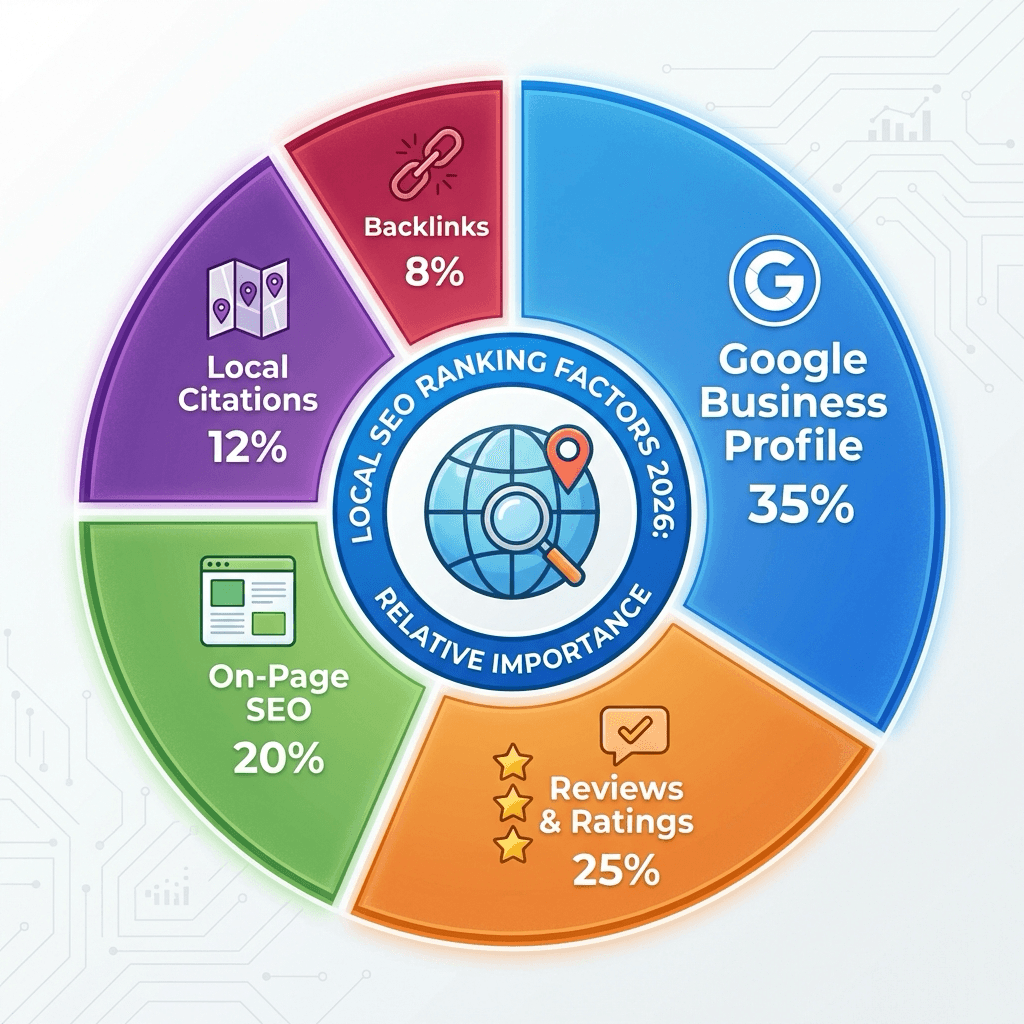
Local SEO ranking factors in 2026: GBP optimisation leads the way
Unlike traditional SEO, which targets national or global audiences, local SEO is about capturing people who are ready to act—right now, in your area. That makes it one of the highest-converting traffic sources for service businesses.
Step 1: Build a Perfect Google Business Profile
Your Google Business Profile is the foundation of local SEO. A complete, accurate, and regularly updated profile significantly improves your chances of appearing in the local pack.
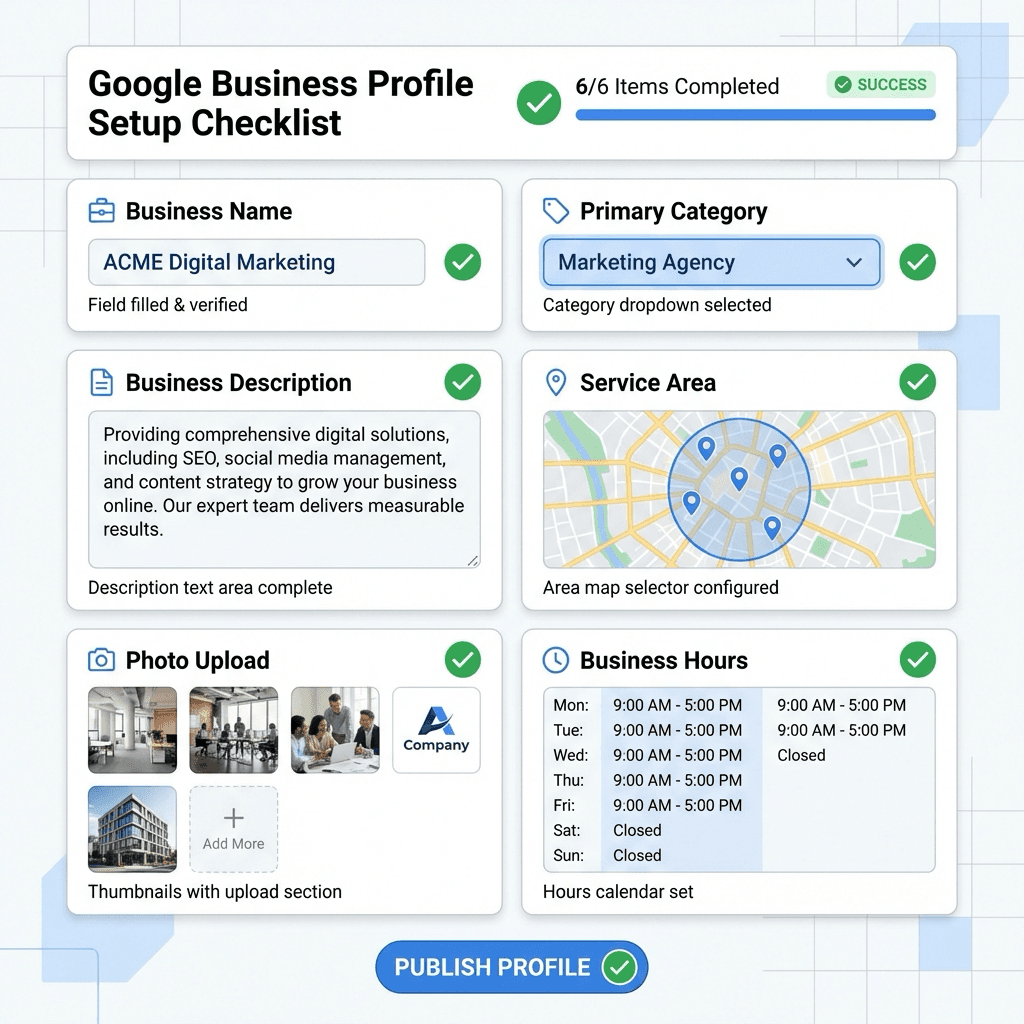
A complete GBP setup checklist ensures you don't miss critical fields
1.1 Choose the Right Primary & Secondary Categories
Your primary category is one of the biggest ranking signals. Choose the category that best describes your main service. For example, if you build websites, "Web Designer" or "Website Designer" is usually more accurate than "Marketing Agency."
Add 1–3 secondary categories that cover additional services you offer—but avoid stuffing categories that don't genuinely apply to your business.
1.2 Write a Clear Business Description
Your description should answer four questions in 750 characters or less:
- • Who you are: Your business name and what you do
- • What you offer: Core services
- • Who you serve: Target customers or industries
- • Why trust you: Experience, certifications, or unique strengths
Include your main keywords naturally, but write for humans first.
1.3 Add Accurate NAP and Service Area Details
NAP stands for Name, Address, and Phone number. These details must be consistent everywhere—your website, directories, social profiles, and GBP. Inconsistent NAP confuses Google and reduces trust signals.
If you're a service-area business (you go to clients instead of them coming to you), configure your service area properly and decide whether to show your physical address publicly.
1.4 Upload Real Photos and Short Videos
Businesses with photos get more clicks and calls. Upload real images: your workspace, team, projects, products, and happy customers (with permission). Add short videos showing your process or completed work. Fresh visual content signals that your business is active.
Step 2: Use Reviews as a Ranking and Conversion Engine
Reviews are a major ranking factor and a trust signal for potential customers. Google considers the quantity, quality (star rating), recency, and how you respond.
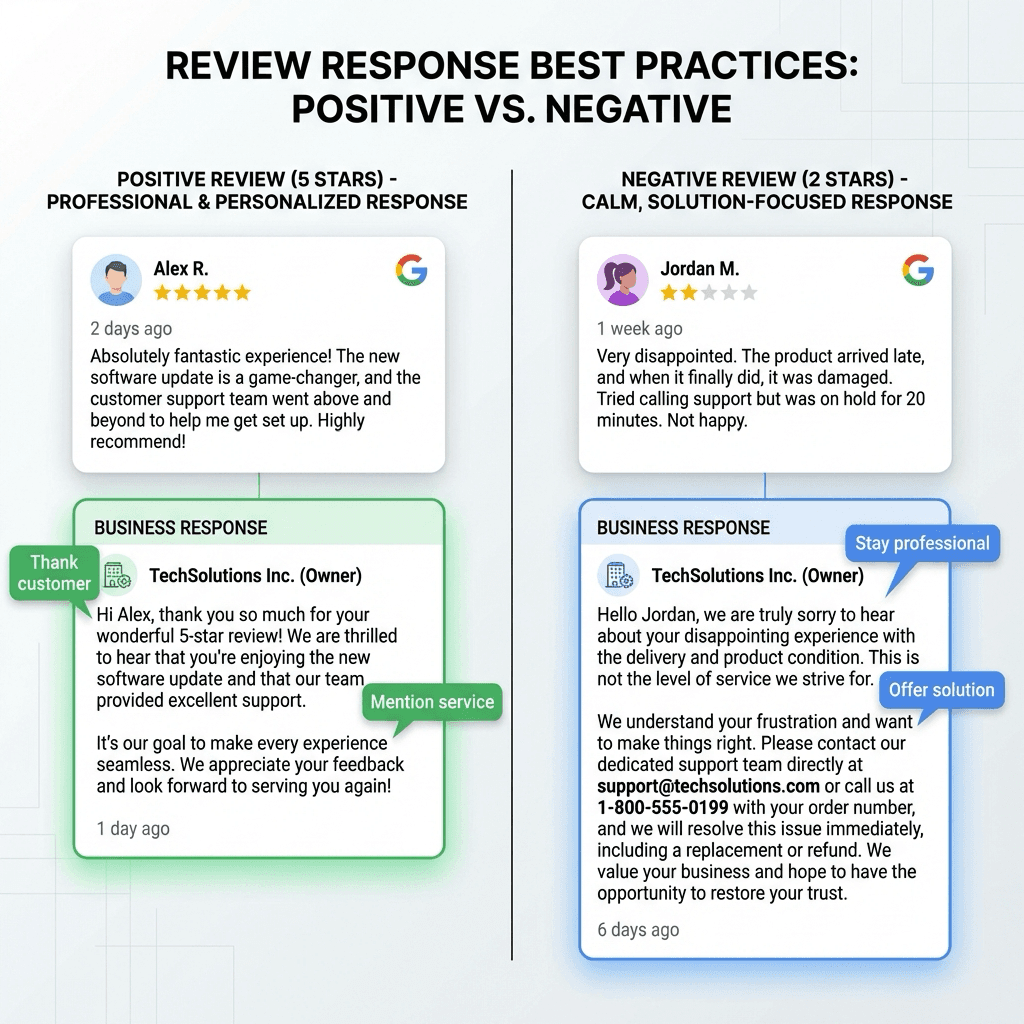
Responding thoughtfully to all reviews builds trust with both Google and potential customers
2.1 Create a Simple Review Request System
After completing a project or service, follow this simple flow:
- Thank the client for their business
- Send them your direct GBP review link (find it in your profile under "Get more reviews")
- Optionally, provide a brief example of what to mention (the service they received)
Most satisfied customers are happy to leave a review—they just need a reminder and a direct link.
2.2 Reply to Every Review—Especially the Bad Ones
Google tracks whether you respond to reviews. Thoughtful responses show that you care about customer feedback. For positive reviews, thank the customer and mention the service. For negative reviews, stay calm, apologise if appropriate, and offer to resolve the issue offline.
2.3 Use Reviews as Content
Embed reviews on your website. Use language from reviews in your marketing copy (e.g., if customers frequently praise your "fast turnaround," feature that in your messaging).
Step 3: Optimise Your Website for Local SEO
Your website supports your local SEO efforts by providing additional content, trust signals, and opportunities to rank in organic results alongside map listings.
3.1 Create a Strong Home Page
Your homepage should immediately answer: where you are, what you do, and who you help. Include your main service keywords, a clear call to action, and your NAP in the footer.
3.2 Make Service Pages
Create individual pages for each core service. Include descriptive headings, relevant content, and FAQs. Link these pages from your navigation and internally from blog posts.
Want to learn more about optimising your service pages? Check out our web development services to see how we structure pages for maximum impact.
3.3 Maintain Technical Health and Speed
Page speed and mobile usability are meaningful ranking factors. Ensure your website loads quickly and works well on phones. If you use Next.js or similar frameworks, optimise images, avoid blocking scripts, and monitor Core Web Vitals.
For a deep dive into speed optimisation, read our guide on website speed optimization.
Step 4: Build Local Citations and Backlinks
Citations are mentions of your business name, address, and phone number on other websites—usually directories. Backlinks are links from other sites to yours. Both signal trust and authority to Google.
4.1 Get Listed on Key Directories
Start with the essentials:
- • Google Business Profile (primary)
- • Bing Places for Business
- • Apple Maps Connect
- • Industry-specific directories relevant to your service
- • Local business chambers or associations
Ensure your NAP is exactly the same across all listings. Small inconsistencies (e.g., "Street" vs "St.") can dilute your signals.
Need help managing your listings? Explore our business listings optimization service.
4.2 Earn Real Backlinks
Quality matters more than quantity. A few links from relevant, trusted websites are more valuable than dozens of spammy directory links. Ideas to earn backlinks:
- • Partner with local businesses or industry communities
- • Sponsor local events or causes
- • Write helpful guides or original research that others want to reference
- • Get featured in local news or industry publications
Step 5: Post Regularly on Google Business Profile
Activity on your GBP signals freshness and engagement. Google tracks how actively you use your profile, and regular posts can improve visibility.
Aim for 1–2 posts per week. What to post:
- • Project screenshots or case highlights
- • Quick tips relevant to your audience
- • Special offers or seasonal promotions
- • Links to new blog posts or updates
Each post should include a call to action (e.g., "Call now," "Learn more," "Book online") and naturally incorporate your main service keyword.
Step 6: Adapt to Google AI Overviews and Zero-Click Searches
Google AI Overviews (AI-generated summaries at the top of search results) are appearing on a growing percentage of queries. However, they're less common on location-specific searches, which is good news for local businesses.
To succeed in this environment:
- Focus on location-plus-service keywords: "web designer in [your area]" is less likely to be answered by AI than "what is web design"
- Create in-depth, trustworthy content: AI Overviews cite authoritative pages, so original, well-structured content has a better chance of being featured
- Show real experience (E-E-A-T): Include case snippets, screenshots, process explanations, and author bios to demonstrate expertise
The principles of good local SEO—being genuine, helpful, and clearly the best choice in your area—align well with how AI systems evaluate trustworthiness.